7300463745
 02084326004
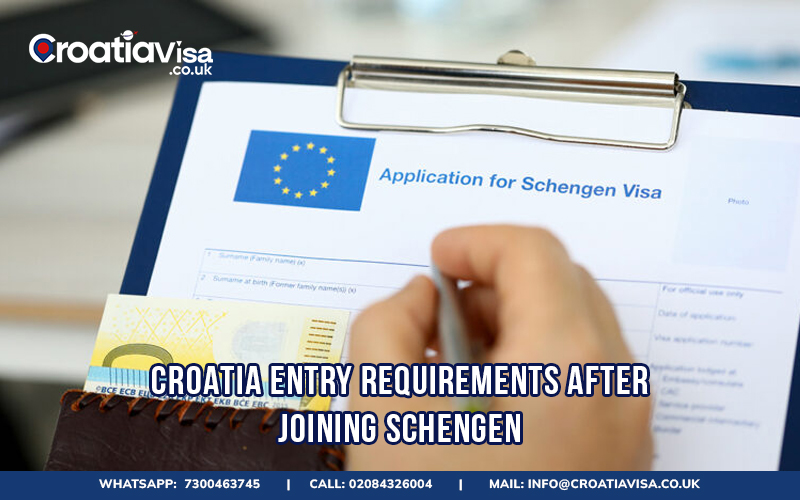
Croatia officially joined the Schengen Area on January 1st, 2023, with checks at internal borders officially lifted on March 26, 2023, and became the 27th member state of the Schengen Area. With the removal of internal border checks within the Schengen area, travellers can now move freely between Croatia and other European destinations.
So, if you’re planning a trip, understanding the updated Croatia entry requirements after Schengen is essential to avoid delays or rejections in the future.
The Entry/Exit System will finally start being rolled out at Croatian borders and other EU borders from 12th October 2025. The rollout will happen gradually, with full implementation across the Schengen Zone expected by 10th April 2026, which has been an important part of modern Croatia entry requirements.
This replaces passport stamping with biometric checks, such as fingerprints and photos, for short stays of up to 90 days in a 180-day period.
With the implementation of the EES in Croatia, non-EU citizens travelling for short stays are affected, as officials upon entry and exit will digitally log the entry and exit dates through biometrics.
Here are some of the key characteristics of EES in Croatia:
Note: EES is not a visa, but it is a registration system. So, if you are from a visa-exempt country, you don’t need a visa for short trips, but by April, both UK residents and UK citizens may need to apply for ETIAS after its implementation.
Since Croatia is part of the Schengen area, the entry rules for UK residents and citizens are based on your nationality rather than where you live.
UK citizens: They do not need a visa for tourism or business trips and can travel to Croatia for up to 90 days in a 180-day period.
UK residents: If you live in the UK and hold a passport from another nationality, you may need to apply for a Croatia Schengen visa.
Note: UK residents need to provide a share code to prove their UK residency, which should be valid after their return from Croatia as part of the official Croatia travel requirements.
Documents are one of the crucial parts of the visa process. In order to meet the requirements, applicants must prepare them in advance before the appointment date. To apply for a Croatia visa from London and to pass through border control smoothly, here is the list of entry rules for Croatia handy during the application process.
There are some other additional documents; check the detailed Croatia visa document checklist. HERE!
The process for Croatia entry requirements is simple. By following the steps mentioned below, international travelers can receive their Croatia visa with ease.
So why wait? Apply for a Croatia Schengen visa from London today with expert assistance. TODAY!
Note: Since the EES system is now active, the 90-day rule is automatically managed by a computer, not a human looking at stamps. So, there is no room for mistakes for overstaying even for a day. If the system flags an overstay, it could lead to fines and future bans.
Understanding Croatia visa rules doesn’t have to be complicated. Use these expert tips to breeze through border control and avoid the common pitfalls of the new digital systems.
Croatia has some of the most spectacular seashores in the world, and the new electronic Croatia entry requirements may seem difficult at first, but they are designed to make the borders both safer and eventually faster. Be sure to have your paperwork ready, abide by the 90-day limit, and do not forget to get a Croatia visa from London in time to have a great time along the Adriatic with your family and friends!

The ETIAS (European Travel Information and Authorisation System) is expected to launch in the last quarter of 2026. Once active, UK citizens and other visa-exempt travellers will need to apply for this before their travel dates to meet updated Croatia entry requirements. ETIAS is a mandatory pre-check travel authorisation for visa-exempt nationals visiting 30 European countries for short stays and aims to enhance security.
If you are a British citizen (holding a UK passport), you do not need a visa for stays up to 90 days for tourism or business. However, if you are a UK resident with a passport from a visa-required country, you must apply for a Croatia Schengen visa from UK before travelling.
Thanks to the digital system of the EES that records each entry and exit of a person, overstaying is almost always detected at once. For 2026, overstayers are liable to pay large fines, may face deportation, and get ‘red-flagged’ in the EU database, which can thereafter deny visas or ban the entry of a person.
A UK residence permit (BRP) or eVisa allows you to live and return to the UK, but it will not serve as a travel document for Croatia. It is a must to travel with your national passport. If your nationality is that of a country needing a visa to enter the Schengen Area, you will have to get one, even if you are a UK resident, to meet Croatia entry requirements.
No, you cannot “reset” your 90-day allowance by leaving Croatia. Because Croatia is now a full member of the Schengen Area, the 90-day limit applies to the entire zone combined, not just Croatia individually. To reset it, you would need to leave the Schengen area entirely by returning to the UK and wait until your oldest travel dates fall outside the current 180-day window. With the Entry/Exit System (EES) now active, these dates are tracked digitally, making it impossible to bypass the limit by crossing land borders.